
For your first test, wait for the ignition interlock device’s prompt, then provide a breath sample as directed. A car breathalyzer measures alcohol in your breath. When connected to an ignition interlock, it controls whether the vehicle can start based on the limit set for your jurisdiction.
Learning how to use a car breathalyzer for the first time can feel unfamiliar. This guide covers the startup test, how to provide a breath sample, basic device care, and ways to reduce the risk of lockouts or unexpected readings.
Key Takeaways
- Wait for the device’s prompt and follow its instructions for a valid startup breath sample.
- Learn how breath-only testing works, including how to respond to the device’s specific airflow cues.
- Reduce the chance of false readings by avoiding common testing disruptions and keeping calibration appointments.
- When you need an approved installer, Ignition Interlock Alliance offers a free matching service to connect you with a state-approved provider.
Cleaning and maintaining the device
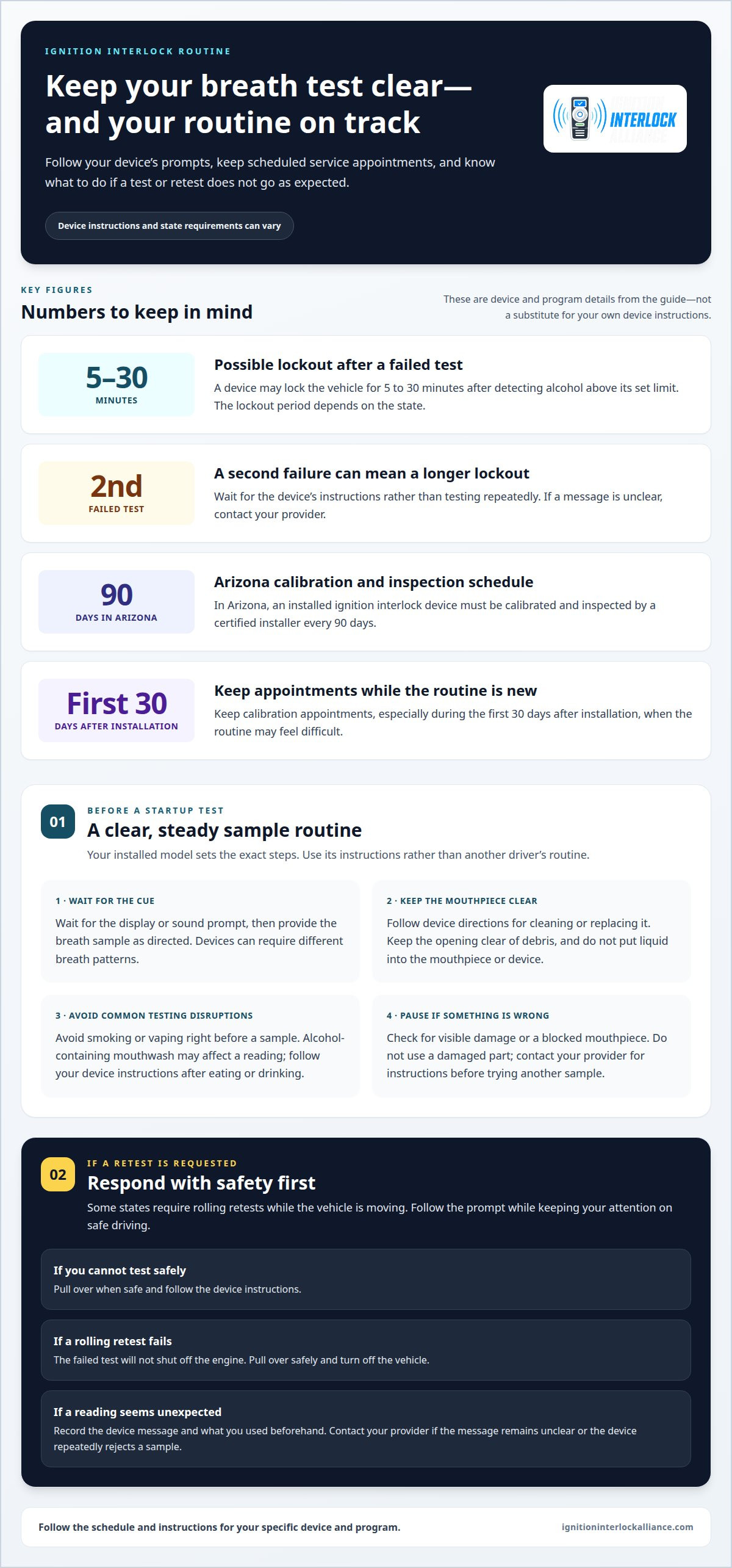
Ignition interlock requirements vary by state and may depend on your offense. Your state sets requirements such as calibration and inspection schedules, so follow the schedule provided for your installation.
- Keep the mouthpiece clean. Follow the device instructions for cleaning or replacing its mouthpiece. Keep the opening clear of debris, and avoid putting liquid into the mouthpiece or interlock device. A clean, dry exterior helps keep controls and prompts easy to use.
- Build a simple care routine. Store the handheld device where it won’t be crushed or exposed to spills. Before testing, look for visible damage or a blocked mouthpiece. Don’t use a damaged part; contact your provider for instructions before attempting another sample.
- Follow the device prompts. Wait for the display or sound cue before providing a breath sample. Devices can require different breath patterns, so use the directions supplied for your specific ignition interlock device. If a prompt is unclear, pause and contact your provider rather than guessing at the technique.
- Keep calibration appointments. A calibration appointment lets a certified installer check and calibrate the device. In Arizona, an installed ignition interlock device must be calibrated and inspected by a certified installer every 90 days. Arizona MVD form 99-0177 describes this calibration and inspection requirement. Keep each scheduled appointment to help avoid missed-service issues.
- Get help when the device raises questions. Contact your provider if the device displays an unfamiliar message, behaves differently, or repeatedly rejects a sample. Describe the prompt and what happened before it appeared. Your provider can explain device-specific steps and direct you on service needs, including whether a calibration or inspection appointment is due.
Make service and calibration appointments a priority rather than treating them as optional device care. Missing an appointment can cause lockouts or violations, so keeping appointments helps you avoid those consequences. Plan to attend each appointment according to the schedule for your device. Do not assume that continued operation means a service or calibration appointment can be skipped; missing appointments can still cause lockouts or violations. Staying on schedule is an important part of maintaining the device and avoiding these problems.
Avoiding lockouts and false readings
- Wait until your mouth is clear before testing. There isn’t one wait interval that fits every food, drink, cigarette, or mouthwash. Avoid smoking or vaping right before a breath sample, and remember that alcohol-containing mouthwash can affect a reading. Follow your device’s instructions before testing after eating or drinking.
- Keep alcohol-containing products away from test time. Mouthwash is one example that may trigger a failed test. Check product labels, and don’t use an alcohol-containing product just before providing a sample. If a reading seems unexpected, record the device message and what you used beforehand. That detail can help explain the event.
- Respond promptly to every retest prompt. An interlock may request another breath sample after the vehicle starts. Follow the prompt as directed, while keeping your attention on safe driving. Some states require rolling retests while the vehicle is moving. If you can’t test safely, pull over when safe and follow the device instructions.
- Know what a failed test can trigger. A device may lock the vehicle for 5 to 30 minutes after detecting alcohol above its set limit, depending on the state. A second failed test can result in a longer lockout. Don’t keep testing repeatedly; wait for the device’s instructions and contact your provider if the message remains unclear.
- Handle a retest failure safely. A failed rolling retest won’t shut off the engine. Pull over safely and turn off the vehicle. Missing a requested retest, repeated failed tests, unusual detected events, or calibration issues can lead to a lockout or violation. Keep calibration appointments, especially during the first 30 days after installation, when the routine may feel difficult.
Smoke particles may affect readings, so avoid smoking or vaping right before an ignition interlock test. If a lockout occurs, contact your provider to understand the cause and next steps. The device does not simply shut off the engine if it detects alcohol, since doing so could create an unsafe driving situation.
Taking a breath test before starting the vehicle
Before your first trip, get familiar with the equipment installed in your vehicle and the instructions for your program. Preparing in advance helps you follow the ignition interlock routine without rushing or relying on someone else’s experience.
- Identify your device and its parts. Locate the handheld unit and mouthpiece, then note how they connect or sit in your vehicle. Knowing which equipment belongs to your installation helps you avoid confusion when you’re ready to drive.
- Read the instructions before your first trip. Review the startup directions in the materials supplied with your interlock. Focus on the order of actions and any device-specific terms. Keep the instructions available in the vehicle so you can refer to them when parked.
- Make room for an unrushed routine. Set aside enough time before leaving. Avoid starting the process while juggling bags, searching for keys, or managing other distractions. A steady routine makes it easier to notice what the device is asking you to do.
- Learn what a completed test means. A valid startup sample that meets the applicable alcohol limit allows the ignition interlock to permit the vehicle to start. Treat the device’s result as the cue to proceed, rather than relying on an assumption about whether the test registered.
- Keep your device instructions specific. If you’re learning how to use a car breathalyzer for the first time, follow the instructions supplied for your installed model. Don’t substitute steps from a different device or another driver’s routine, since testing procedures can vary.
- Prepare for an unexpected message. If the device displays a result or instruction you don’t understand, don’t guess at its meaning. Note the wording and consult the device guidance while safely parked. This gives you a clear detail to share when asking for device help.
- Build consistency into each departure. Keep the same device and instructions together, and use your established startup routine each time. Consistency helps you recognize normal device behavior and spot a change that may need attention before it disrupts your plans.
Blow-only test technique
- Read the prompt before blowing. An ignition interlock may use a blow-only pattern, but instructions differ by device. Check the display or listen for its cue. Don’t add humming, pauses, or another airflow action unless your device specifically requests it.
- Position the mouthpiece as directed. Hold the handheld unit steadily and place the mouthpiece as shown in its instructions. Keep your face and hands clear of the opening. A poor position can make it harder to provide the sample the device requests.
- Use the prompted breath pattern. Start only when the device signals readiness. Blow as directed, keeping the airflow consistent if the instructions call for a steady breath. Some interlocks require multiple steps or changes in airflow, so don’t assume every model uses one simple blow.
- Finish when the device signals. Stop when the prompt indicates the sample is complete. Don’t keep blowing after the device accepts the breath. Watch for its result or next instruction before moving on to ignition or driving.
- Respond calmly to an incomplete sample. If the device says the sample was invalid, pause and read the message. Follow the next prompt rather than changing technique at random. Repeating a guessed pattern may create additional failed tests or a violation.
- Learn the exact routine for your installed device. At installation, pay attention to the certified technician’s demonstration and the device’s written instructions. Note what the prompts mean and how the unit signals completion. These details help you repeat the correct technique on later trips.
- Keep a record of recurring problems. Write down the device message and what happened before an unexpected rejection. Share those details with your provider if the same issue continues. For help connecting with an approved interlock installer, find a state-approved provider.
Ignition Interlock Alliance
Ignition Interlock Alliance can help when you need an approved installer after learning how an ignition interlock works. Its free Intoxalock matching service connects you with certified, state-approved providers. The service makes a referral; the provider handles installation and device monitoring.
Requirements vary by state and offense, so matching support can help you find an appropriate provider. Ignition Interlock Alliance’s matching service is free, with no obligation to proceed. It connects you with an Intoxalock provider; it does not provide legal representation, manufacture devices, or repair vehicles. Request a free provider match from Ignition Interlock Alliance to take your next step.
Make your next step a practical one
Learning how to use a car breathalyzer for the first time is one part of getting ready for an ignition interlock requirement. Your next step is making sure the device and installation process fit the requirements that apply to you. Keep your instructions somewhere easy to reach, and build the testing routine into your travel plans. That preparation can make the process feel more manageable as you get used to the device.
If you’re still arranging an approved installation, focus on finding a provider that serves your area and can address your state’s requirements. You don’t need to solve every detail at once. Start with the connection you need now, then take the next step when you’re ready. Contact Ignition Interlock Alliance to discuss your provider-matching needs and move forward with greater clarity.
Frequently Asked Questions
What Is a Car Breathalyzer?
A car breathalyzer is the breath-testing component of an ignition interlock setup. Unlike a handheld breath tester used on its own, it works with equipment connected to the vehicle. The handheld unit is the part you use to provide a sample, while the vehicle connection makes the test part of your ignition interlock program.
How does an ignition interlock breathalyzer work?
An ignition interlock compares the alcohol detected in a breath sample with the limit programmed for the driver’s jurisdiction. The result is part of the device’s activity record, which can be reviewed during service. Calibration helps keep the device operating within its required settings. The precise limit and program conditions depend on state requirements and the terms that apply to your case.
Can medications, alcohol-containing products, or foods cause a false positive on an ignition interlock?
Alcohol-containing products can affect a breath reading, but do not assume a particular food or medication will cause a positive result. If you have concerns about a medication, ask your prescribing health professional about its ingredients and effects. Note the product name and device message so you can give your provider useful context if a reading seems unexpected.
How long should you wait after eating, drinking, smoking, or using mouthwash before giving a breath sample?
There is no single waiting interval for every food, drink, cigarette, or mouthwash. Follow your device’s instructions after eating or drinking, and avoid smoking, vaping, or using alcohol-containing mouthwash right before testing.


