
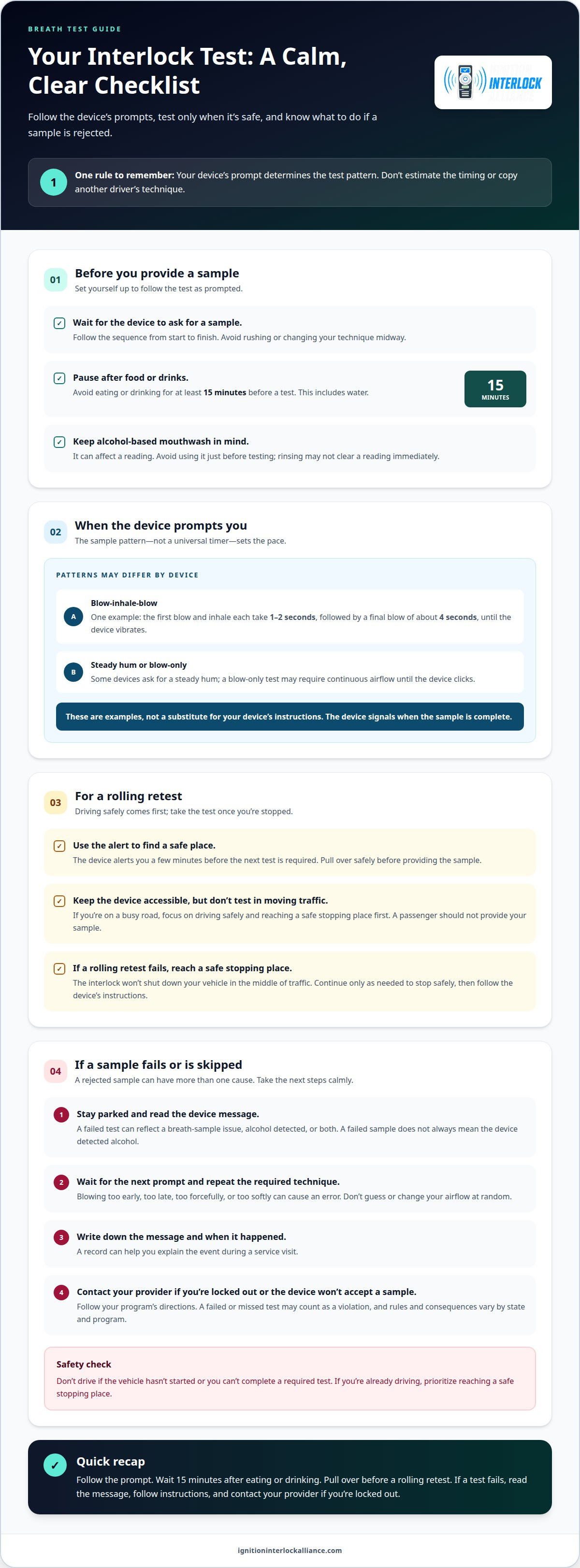
For a blow-inhale-blow test, the first blow and inhale each take one to two seconds, followed by a final blow of about four seconds, until the device vibrates. So, how long do you have to blow into an interlock? It depends on the device’s prompts and test pattern, so wait for the cue and follow it closely.
A rejected sample can feel stressful, especially when you’re ready to drive. A mistimed breath or one that’s too forceful or too soft can cause an error, but a failed test doesn’t always mean the device detected alcohol.
This guide explains how to give a breath sample, what to do after a failed test, and how rolling retests work. You’ll also learn how food, drinks, and mouthwash may affect a reading, so you can approach each test with a clear plan.
Key Takeaways
- Wait for your device’s prompt and follow its specific breath-test pattern to reduce avoidable errors.
- If a test fails, stay calm and follow the device’s instructions; contact your interlock provider if you experience a lockout.
- Take rolling retests as directed, and prioritize reaching a safe place before testing.
- Avoid food and drinks for at least 15 minutes before a test, and keep in mind that alcohol-based mouthwash can affect a reading.
How Long Should I Blow into an Ignition Interlock Device?
If you’re unsure how long you have to blow into an interlock, follow the device’s prompt. The required pattern depends on the device and your state program, so don’t rely on another driver’s timing.
Typical Breath-Test Duration
An ignition interlock breath test lasts as long as needed to complete the prompted sample. Some patterns involve blowing, inhaling, and blowing again; others use a steady hum. The device signals when the sample is complete. To know how long you have to blow into an interlock, follow the sequence rather than trying to estimate the duration.
Providing a Consistent Breath Sample
Wait until the device asks for a sample, then follow its instructions from start to finish. Avoid rushing through a sequence or changing your technique midway. Alcohol can affect a reading, and hangover symptoms can last 24 hours or longer even when a person passes an interlock test, according to the National Institute on Alcohol Abuse and Alcoholism. Feeling better doesn’t establish that alcohol has cleared your system.
Required Breath-Test Patterns
State programs and device patterns can differ. A device may prompt a blow-inhale-blow sequence or a steady hum until it clicks. Humming can help confirm the sample comes from a real person. Follow the sequence your device prompts rather than copying someone else’s technique.
The required installation period after a DUI depends on state rules and the offense. Installation and maintenance charges vary by provider and program. While driving, the device’s prompts and your program requirements determine how often you need to provide another breath sample.
What to do after a failed test
A failed ignition interlock test can reflect a problem with the breath sample, alcohol detected, or both. Stay parked and read the device’s message before taking another step. The device may reject a sample if your airflow does not match the required pattern. A reading above your program’s alcohol limit can also prevent the vehicle from starting.
If the device signals a lockout, contact your ignition interlock provider. Don’t keep guessing at the test pattern. Follow the prompts, since blowing too early or too late can cause an error. Program rules and the consequences of a failed test vary by state, so your program may require a specific follow-up action.
Alcohol-containing mouthwash used just before testing can trigger a failed reading. If you’ve just used it, don’t assume rinsing your mouth will clear the reading immediately. Avoid alcohol-based mouthwash before a test, and follow the device’s instructions if it rejects your sample.
For a blow-only test, take a deep breath and blow continuously into the mouthpiece until the device clicks. The test ends when the device signals completion, not after a universal number of seconds. If your sample is rejected, wait for the next prompt and repeat the required technique instead of changing your airflow at random.
You must provide an initial breath test before the vehicle can start. The first test happens before you start the car. While driving, the device may request additional samples as rolling retests, so respond to its prompts as directed.
A failed result can be unsettling, but the next steps are practical: note the message, follow the device’s instructions, and contact your provider if you’re locked out. Don’t drive if the vehicle hasn’t started or you can’t complete a required test. Your program’s rules determine what happens after a violation.
Failed or skipped retests
A rolling retest checks your breath while you’re already driving. The device alerts you a few minutes before the next test is required. Respond to its prompt and pull over to a safe location before providing the sample. Don’t try to test while handling the vehicle or moving through traffic. The alert gives you time to find a safe place, not a reason to rush.
If a rolling retest fails, the ignition interlock won’t shut down your vehicle in the middle of traffic. Continue driving only as needed to reach a safe stopping place, then follow the device’s instructions. A failed reading or missed test may count as a program violation. Rules and consequences depend on your state and program.
Keep the device accessible so you can respond when its alert sounds. If you’re on a busy road, focus first on driving safely and pulling over. Once stopped, take the test as directed. A passenger should not provide the breath sample for you; the test is intended to record the driver’s breath.
Don’t ignore or intentionally skip a retest. In many states, one program violation can require an unscheduled service visit. Your program may also record a failed or missed test for review. Follow the device’s instructions, and contact your ignition interlock provider if you’re locked out or it won’t accept a sample.
A failed morning-after test generally means your body hasn’t finished processing alcohol from the previous night. Don’t assume sleep, coffee, or feeling alert means you’ll pass. You must still respond when the device prompts you, and a reading above your program’s limit can count as a violation.
After any failed or skipped test, write down the device message and when it occurred. This record can help you explain the event during a service visit. State rules differ, so follow your program’s directions for reporting a violation and arranging any required service.
Follow the device’s prompts and complete each rolling retest as directed.
Food and drink before testing
Food and drinks can affect an ignition interlock breath test, especially when residue remains in your mouth. Avoid eating or drinking for at least 15 minutes before testing. That pause helps reduce the chance that recent food or a sip of alcohol affects the breath sample. Follow the device’s prompt when you’re ready to test.
If you’re wondering whether you can drink water before using my ignition interlock, include water in that 15-minute wait. Coffee, food, water, exercise, and a cold shower don’t speed your body’s processing of alcohol. They can’t make alcohol leave your system faster or guarantee a passing result. Only time allows your body to process alcohol.
Alcohol-based mouthwash can affect a reading if you test soon after using it. For example, using mouthwash in the car before starting the vehicle may leave alcohol in your mouth when you blow. Avoid using it right before a test. A breathalyzer can detect a sip of alcohol if you test shortly afterward, so don’t assume a small amount won’t matter.
Recent drinking can affect a test later, including the next morning. There is no reliable fixed number of hours after drinking that guarantees you’ll pass an ignition interlock test. Coffee or a shower won’t change that. The reliable way to avoid an alcohol-related failed test is not to drink when you’ll be driving, including the following morning.
Keep the steps simple: avoid food and drinks for 15 minutes before testing, skip alcohol-based mouthwash beforehand, and follow the device’s instructions. If you’ve recently had alcohol, don’t use water, coffee, food, or exercise to try to change the result. Those actions don’t speed alcohol processing, and driving should wait until you can do so safely.
Ignition Interlock Alliance
Ignition Interlock Alliance can help you take the next step if you need an approved ignition interlock provider. Its free Intoxalock matching service connects you with a certified, state-approved provider for installation and monitoring. The service is free to you and comes with no obligation.
Turn to the service when you understand your testing responsibilities but still need help finding a provider that fits your state’s requirements. State rules vary, and the provider handles device installation and monitoring. Ignition Interlock Alliance helps make that connection and explains how it is compensated for referrals.
You decide whether to proceed with a match. If you’re ready to explore a provider connection, contact Ignition Interlock Alliance.
Make Your Next Step Count
As you plan for your first drive with an interlock, treat setup as part of getting ready, not an afterthought. Your state and program requirements shape which approved provider you need, so arranging a connection early can make the transition clearer. Knowing how long you have to blow into an interlock helps you prepare for the device routine, while finding a suitable provider moves the larger process forward.
Ignition Interlock Alliance’s free Intoxalock matching service connects you with a certified, state-approved provider. It’s a practical starting point when you’re ready to move from understanding the requirement to arranging a provider match. The service is free to you and comes with no obligation.
Take the next step at your own pace. Contact Ignition Interlock Alliance to explore a provider match and move forward with greater clarity.
Frequently Asked Questions
What Happens if I Can't Pass my Ignition Interlock Breath Test?
If the vehicle won’t start or the device indicates a lockout, follow its displayed instructions and contact your ignition interlock provider. A failed result may come from a rejected breath sample or alcohol above the program limit. Note the device’s message and whether it accepted your sample. This information can help clarify what happened and what your program requires next.
Can You Fail an Interlock Test the Morning After Drinking?
Yes. A morning-after test can fail if alcohol is still affecting your breath reading. Alcohol can continue entering your bloodstream from your stomach and intestines after you stop drinking, including while you sleep. Feeling rested or having no noticeable symptoms doesn’t establish that you’ll pass. Take the device result seriously, and don’t drive if you’re impaired or unable to meet your program’s requirements.
How Long Does Alcohol Stay on Your Breath for an Interlock?
There’s no reliable fixed period that tells you when alcohol will no longer affect an interlock reading. A breathalyzer can detect alcohol after even a sip if you test shortly afterward. The reading also depends on whether alcohol remains in your body, not just on the taste or smell in your mouth. Don’t use a set waiting time to decide you’re clear to drive.
How long after you stop drinking can you pass an interlock device?
No fixed number of hours guarantees a passing test after drinking. Your body continues processing alcohol after you stop, and alcohol may keep entering your bloodstream while you sleep. Coffee, water, food, exercise, or a cold shower won’t speed that process. If you’ve been drinking, don’t use a timer or how you feel as proof that driving is safe.
How long can an interlock system detect alcohol?
An interlock detects alcohol in the breath sample when the reading exceeds the limit set for your program. There isn’t one universal detection duration, because the device measures the sample when you test rather than tracking a fixed countdown after drinking. A reading that’s acceptable for an ordinary driver may still exceed the interlock’s set point and prevent the vehicle from starting.
What Happens If I Blow Too Hard or Too Softly into the Device?
The device may reject a sample if your airflow is too forceful or too soft. Wait for its prompt, then use a steady breath that matches the requested pattern. If the device rejects the sample, pause and follow the next instruction instead of changing your technique mid-test. A rejected sample differs from a reading that detects alcohol above your program’s limit.

